A few days ago I found myself talking to an elderly man. He was eighty years old, lean and strong in the way that only a life spent outdoors produces. He has devoted much of his life to planting trees. And yet, somewhere in his own family, someone had taken a hazelnut tree down. The branches of a cedar nearby had been hacked away. The reason given was that the house needed to be more visible.
Visible.
An eighty-year-old man plants trees his whole life, and someone cuts them down so the house can be seen from the road. That one word seems to hold more than it should. A need to be seen, at the cost of everything worth looking at.
This, it seems, is one version of growth in our “Modern Kumaon”. There are other annecdotes I could share, but I will leave it here.
Why I Started Climbing Here
Almora was once known as the cultural capital of Kumaon. The rich heritage and traditions of this region attracted spiritual and knowledge seekers from across the globe. But over the last few decades, something changed. It is difficult to define precisely, but easy to recognise in its symptoms: forests thinned not by necessity but by habit; concrete poured without care; landscapes altered in the name of development, yet rarely improved.
There is a quiet disconnection that has taken root. An estrangement from the land itself. Trees are cut not because survival demands it, but because visibility does. Branches are removed not because they threaten collapse, but because they obstruct a view.
The changes are often incremental. A clearing here. A trimming there. A widening of space for the sake of appearance. But taken together, these small acts accumulate into something harder to reverse.
It was precisely because of this atmosphere that I began developing climbing in Almora.
Climbing offered something pure and incorruptible. On a rock face, there are no shortcuts. You either have the strength, balance, and clarity to move upward, or you don’t. Gravity does not negotiate. The rock does not respond to influence. Nine years of climbing have taught me that.
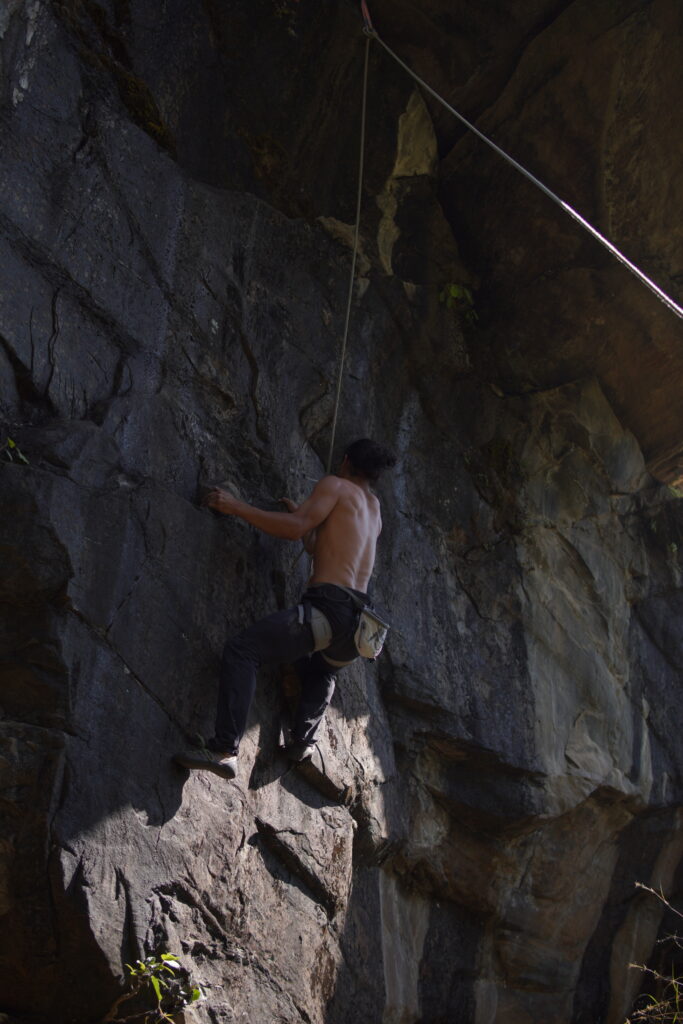
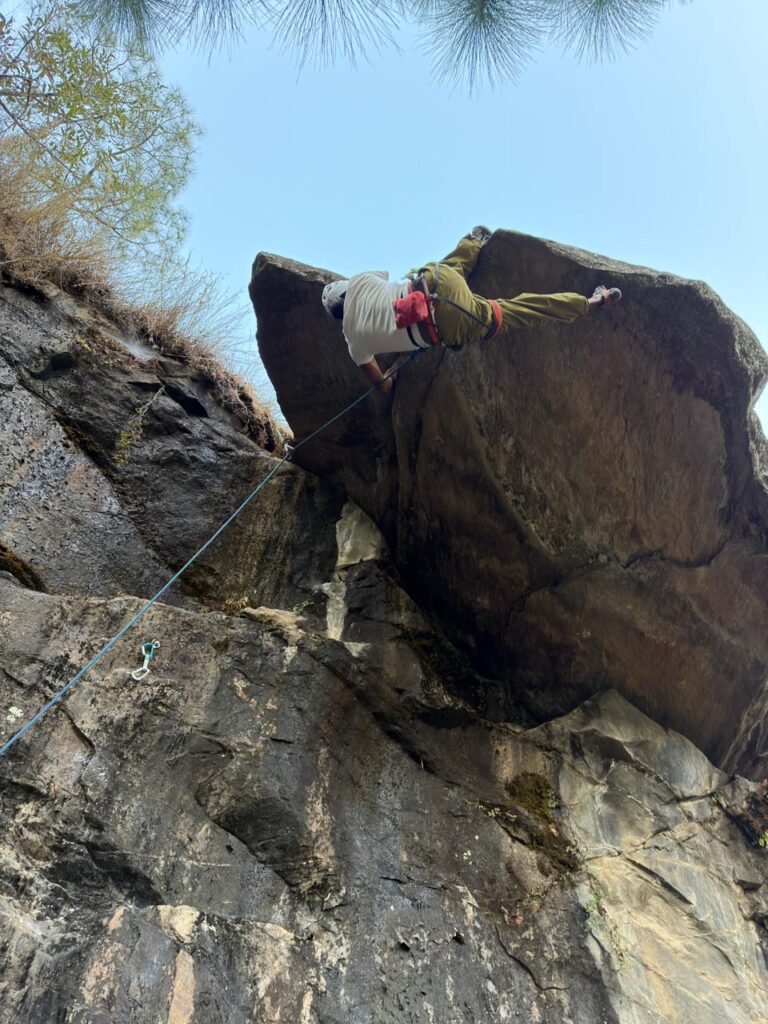
More importantly, the relationships formed on rock are built on trust. When someone belays you, they quite literally hold your life in their hands. There is no space for performance there. Only competence. Only respect.
I started in 2019. There was no climbing community in Almora at the time. I was starting from zero.
I documented everything from the beginning. Logging climbs came naturally to me; I have always kept journals. The real turning point came when I found a climbing guidebook for the Delhi region. Only a handful of climbers used it then, but I understood what it represented. A guidebook is infrastructure. It signals permanence. It says: this matters enough to record.
So I wrote one for Almora.
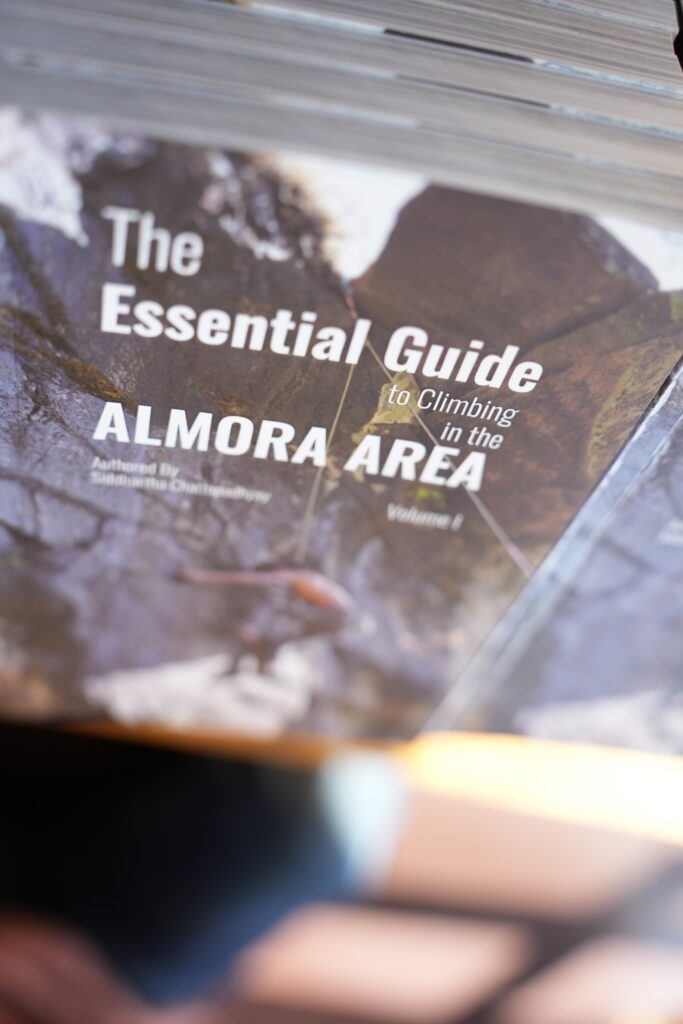
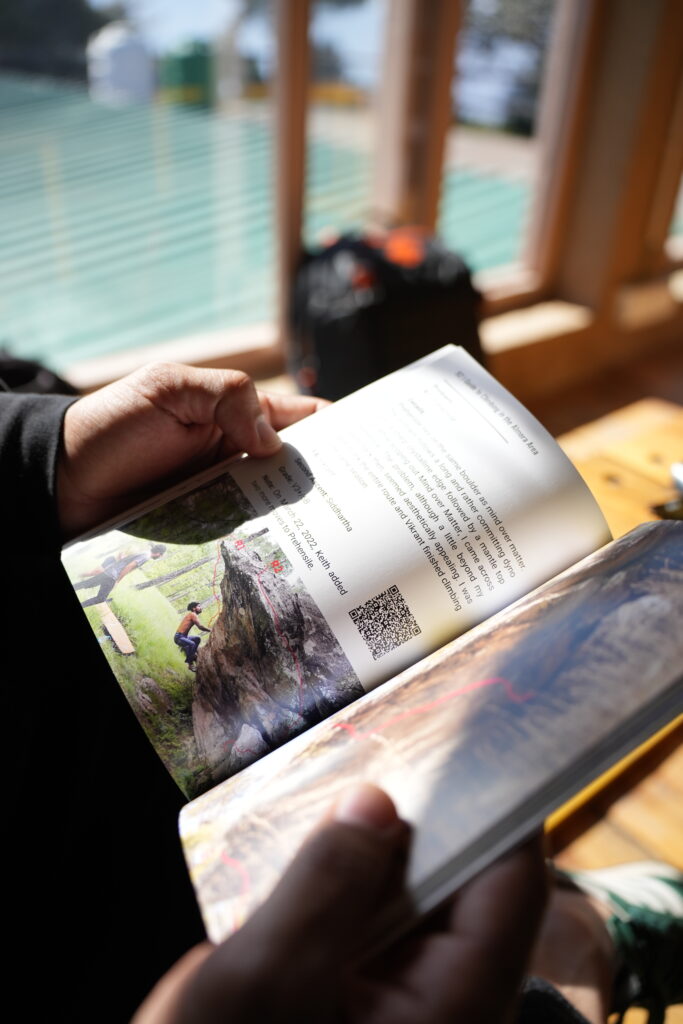
The first volume was self-published in limited numbers, an experiment as much as a document. It covers top-rope routes and boulders, with several lines recently bolted as sport routes with the help of friends from nearby towns. There are still faces untouched, lines waiting to be imagined. A second volume will come, but much later.
I should be honest: I am open to anyone who wants to learn, but I prefer climbing alone. Community-building, in the conventional sense, is no longer my instinct, though it once was. What I intend to do now is document what is here, put it on the map, and leave the door open. What happens after that is not mine to control.
What makes Almora worth this effort is the way it is positioned. You can climb here with some of the largest mountains in the world rising behind you. The setting is rare, world-class, even. But the landscape is more than backdrop. It is fragile.
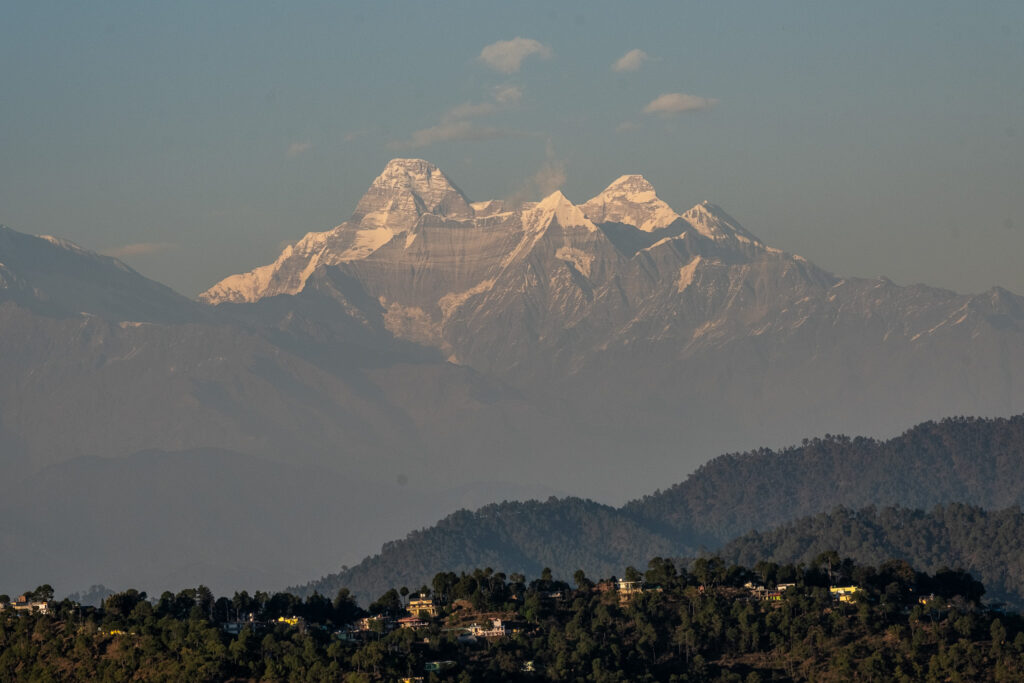
If climbing here is to mean anything, it must cultivate care. It must give people reason to see these cliffs and forests not as obstacles to development, nor as scenery to be cleared for visibility, but as something worth protecting.
Whether that recognition comes or not, I will continue to climb.
Upward movement, at least here, still has meaning.